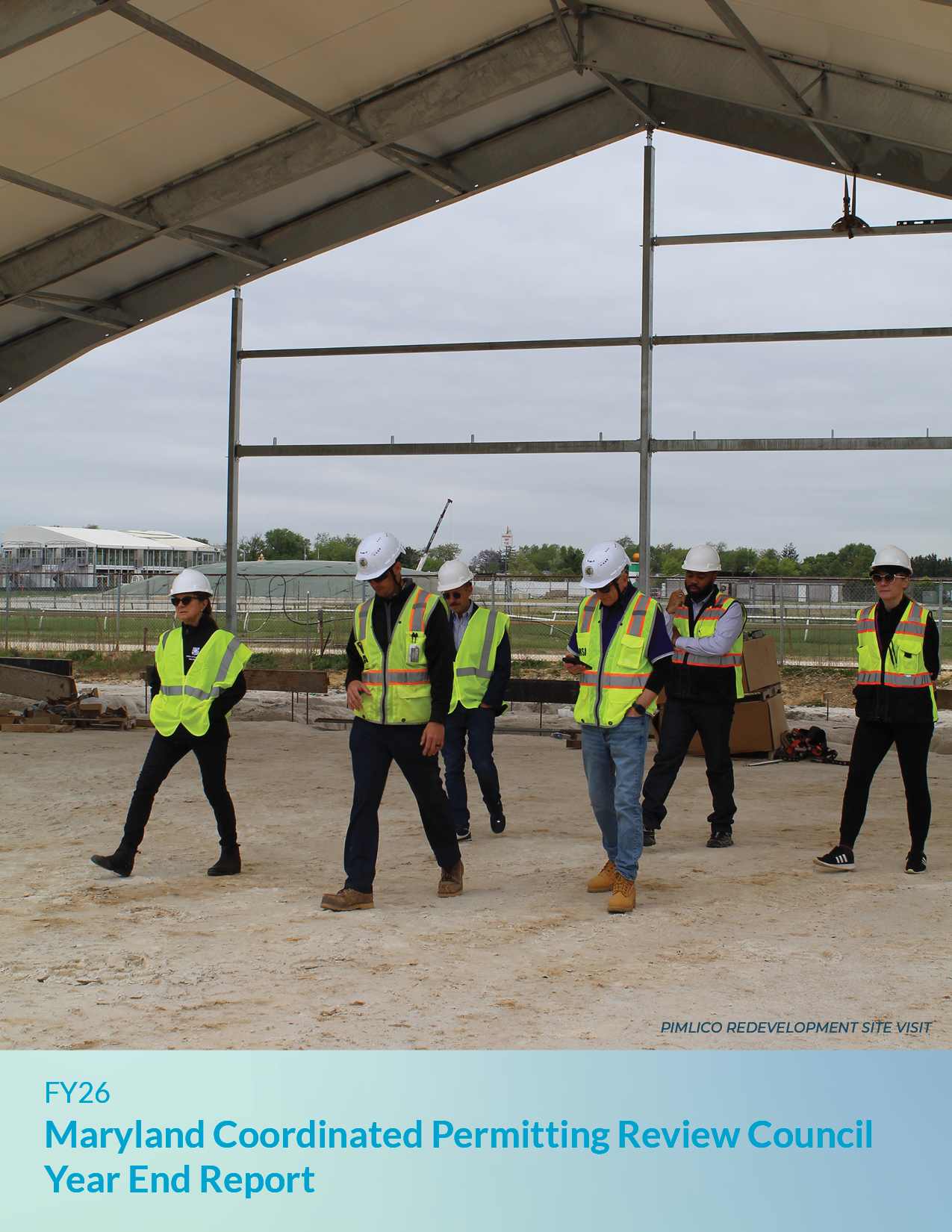
FY26 Year End Report
Modernizing Maryland's Permitting System
Download Report | Read Report Online
14 | 6
| 8
| 4
|
Public Meetings
| Pilot Projects
| Key Findings
| Action Areas
|
Key Findings at a Glance
⚙️ Process
| 📜 Regulatory
| 💻 Technology
| 📊 Accountability
|
Communications and review methods create uncertainty for applicants.
| Regulatory complexity increases project costs and reduces predictability.
| Fragmented systems limit transpartency and project tracking.
| Oversight and coordination structures require modernization.
|
💡
Core Takeaway
Maryland's permitting challenge is not a single broken process. It is a fragmented system of agency workflows, inconsistent review practices, limited transparency, and insufficient cross-agency coordination.
Learn More About the Findings
⚙️ Process
Communication, review methods, and coordination practices vary across agencies and jurisdictions. Clearer expectations, consistent points of contact, and stronger interagency coordination can improve predictability and create a more customer-focused permitting experience.
📜 Regulatory
Maryland’s permitting framework includes many statutory and regulatory requirements that protect public health, safety, and natural resources. The Council identified opportunities to reduce unnecessary complexity, improve predictability, and better align permitting processes with economic development priorities.
💻 Technology
Permitting information is spread across multiple agencies, systems, and workflows. Improved data sharing, project tracking, and digital tools can provide applicants and reviewers with a clearer view of project status, requirements, and next steps.
📊 Accountability
A more transparent permitting system requires clear roles, shared performance expectations, and consistent progress tracking. Strengthening oversight and coordination can help identify bottlenecks, support continuous improvement, and build public confidence in Maryland’s permitting process.
FY26 Q1 Report